Film fixer and service production in Suriname
Waves Films & Stories is a production company in Paramaribo. We get international crews into Suriname, onto location and back out with the footage they came for.
Tell us about your shootWaves Films & Stories, Paramaribo
 What we handle
One local partner from first call to wrap
You send a script, a treatment or a list of questions. We answer with what is possible, what it costs and how long it takes. On the ground we run the shoot with you.
Permits and permissions
We arrange filming permits per location, drone clearance and the import of your equipment. In the interior, permission also comes from the community. We ask the village leadership before a camera comes out of the case, and we stay for the krutu when one is called.
Local crew
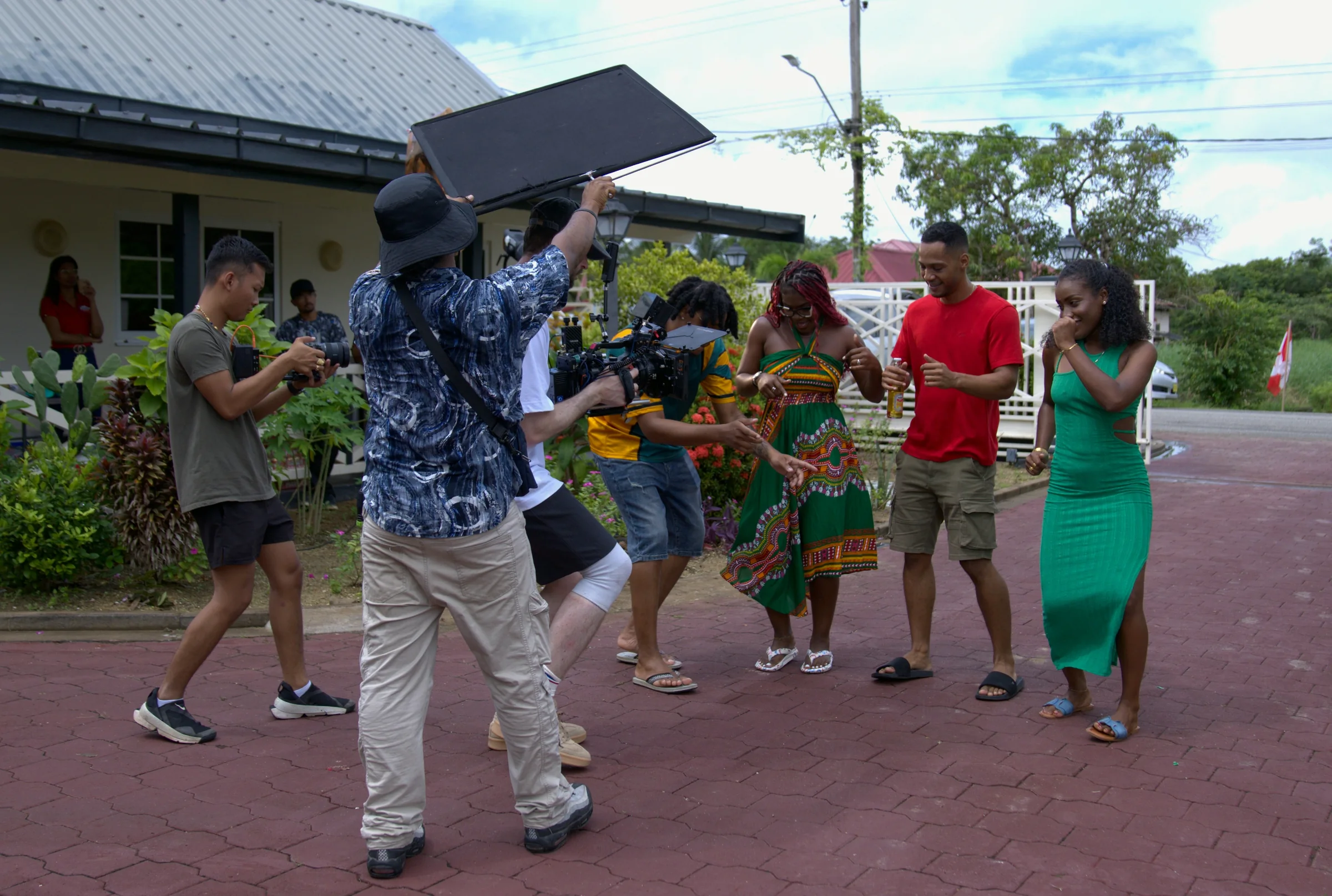
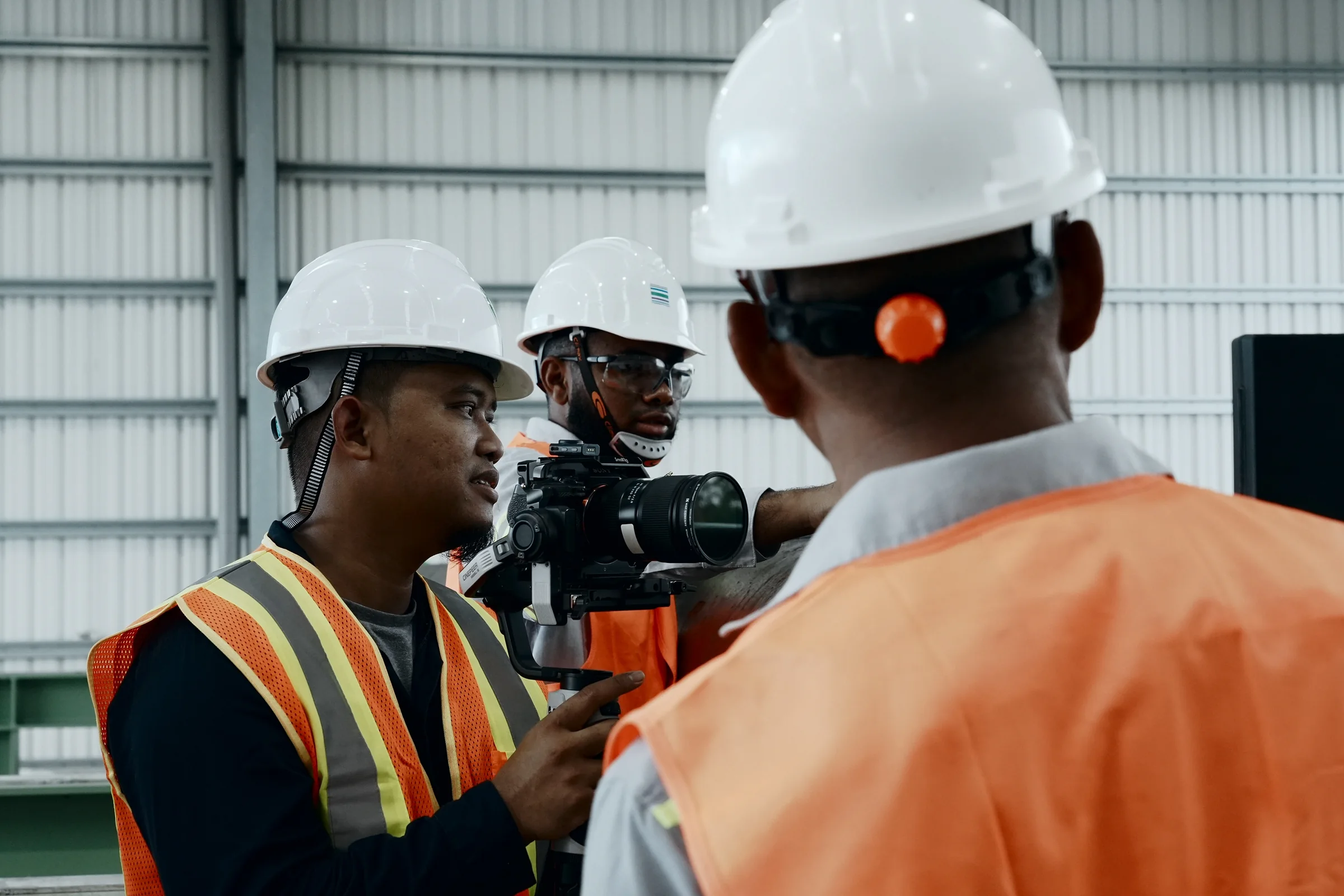
Camera, sound, grip, lighting, drone and production staff from Suriname. We build the team around your heads of department, or we field a full crew ourselves. On Parbo 70 jaar the whole nineteen-person crew was Surinamese.
Locations and scouting
We scout with photos, travel times and access notes, so you can decide from your desk. If a location needs a boat, a plane or a conversation with a village first, you hear that before you commit.
Logistics in the interior
Many locations are reachable only by boat or small plane. We arrange river transport, charter flights, 4x4s, camps, catering and power. For Reality Queens we kept nine locations running for a German team of thirty.
Casting and extras
Street casting, extras, contributors and translators. We work in Dutch, English and Sranantongo, and with people who speak the languages of the interior.
Blue Wave graduate
Waves graduated from the Blue Wave Supplier Development Program in 2026. Our HSSE, Quality, ESG and Cyber Security policies are available on request.
Filming in Suriname
The country in short
Suriname lies on the north coast of South America, between Guyana and French Guiana. About ninety percent of the country is rainforest. Most of its six hundred thousand people live in and around Paramaribo, the capital, whose wooden inner city is a UNESCO World Heritage site.
Landscapes
From Paramaribo you reach savanna, blackwater creeks and former plantations along the Commewijne river within an hour or two. Further south you find rivers with rapids, the Brokopondo reservoir, granite mountains in the Central Suriname Nature Reserve, and Maroon and Indigenous villages along the rivers. The coast has mangrove, rice polders in Nickerie and sea turtle beaches at Galibi.
Climate
The long rainy season normally runs from late April to mid August, with a shorter one in December and January. Suriname lies outside the hurricane belt. Days are about twelve hours long all year, and temperatures sit between roughly 24 and 32 degrees Celsius.
People and languages
Dutch is the official language and Sranantongo is the language of the street. English is widely understood. The population has roots in Africa, India, Java, China, Europe and the Indigenous peoples of the region, and you see that in the food, the faiths and the faces on screen.
Getting here
Johan Adolf Pengel International Airport (PBM) is about an hour's drive south of Paramaribo. KLM and Surinam Airways fly nonstop from Amsterdam in around nine hours, and there are regional connections through Miami, Panama City and the Caribbean.
Frequently asked questions
What producers ask us before they book
These questions come from the emails we get from production managers, with the answers we give them.
Do we need a filming permit in Suriname?
In Paramaribo you can film in public without a permit, unless you want to close a street. Private locations are agreed with the owner. Nature reserves need a permit from the government's nature conservation service. In the city a local face next to the camera changes how people respond to a foreign crew.
Can we film in Maroon and Indigenous villages?
Yes, with permission from the traditional authority, under the FPIC protocol. That request is made in person, often in a krutu, and it takes time and the right introductions. We make the request and stay in contact with the village during the shoot.
Can we bring our own equipment?
Yes. Suriname does not accept ATA Carnets. Your kit comes in as a temporary import and is declared again on the way out, and our customs broker handles both. We need your equipment list with makes, models, serial numbers and values about two weeks ahead, plus a short company declaration that the kit leaves with the crew. The clearance fee depends on the number of cases and their value.
Can we rent equipment locally?
Camera, lighting and grip can be hired here. LED lighting is widely available, and renting it locally often costs less than the excess baggage. Specialist kit is best brought in.
Can we fly a drone?
Yes, under the rules of the civil aviation authority, CASAS. We work with licensed drone operators from Paramaribo who bring their own aircraft and take care of the permissions. A few areas are geofenced.
Do we need a visa?
That depends on your passport and on the purpose of the trip. Suriname's visa-free entry with an online entry fee is meant for tourism and family visits. Travel for work falls under other rules, so tell us who is coming and what they will do here. We check what each crew member needs and what to apply for through VFS Global. Everyone also fills in the online immigration form within seven days of the flight, and passports must be valid for six months on arrival.
Can we shoot in the rainy season?
Usually, yes. Rain rarely stops a shoot in and around the city. Upriver it changes water levels and travel times. The seasons have been shifting, so we plan every schedule with a buffer.
Is there local crew, and do they speak English?
Suriname has experienced camera, sound, grip, lighting and production crew, a small pool compared with larger countries. Sets run in English without trouble. Very specialised roles usually travel in with the production.
Can you shoot it for us, without our team travelling?
Yes. Some productions only need a few scenes or city shots from Suriname. We shoot those to your shot list with a local director of photography and deliver the footage.
How do we get around?
Traffic drives on the left. Outside the city many roads are unpaved, so we put crews in a 4x4 with a driver who also fixes and translates. Paved roads run south as far as Atjoni. Beyond that you travel by dugout canoe or by charter plane from Zorg en Hoop airfield in Paramaribo.
Where does the crew stay?
Paramaribo has international hotels and apartments for longer stays. In the interior crews sleep in river lodges, guesthouses or a camp we build for the shoot.
Is there power and internet in the interior?
Mains power is 127 volts at 60 Hz, with both American and European sockets in use. Paramaribo and the coast have 4G coverage, and we can have local SIM cards ready on arrival. In the interior coverage drops off quickly, so we bring generators and arrange satellite internet where the shoot needs it.
Does Suriname have a film tax incentive?
No. There is no film incentive or rebate. Local crew and location costs are lower than in Western Europe or North America, while transport in the interior takes a large share of most budgets.
Can we pay by card on the ground?
Budget for cash. International cards work in the larger hotels in Paramaribo and rarely beyond, and ATMs outside the city are scarce and often empty. We run a cash float during the shoot and reconcile it against receipts in an expense sheet you can follow.
What about insurance?
Equipment insurance cannot be bought in Suriname, so bring international production insurance that covers your kit. Our crew are medically insured. Damage to rental cars is passed on to the renter here, and we agree how to cover that before you travel.
What happens in a medical emergency?
Trauma care is in Paramaribo, at the Academic Hospital. Air evacuation from the interior is possible in daylight only, because the city airfield closes at 18:00. For remote shoots we write a safety and emergency plan with you, and we can add a paramedic, an ambulance on standby and satellite phones.
Do we need vaccinations?
Flying in from Europe or North America you need no vaccination certificate. Arriving from a country with yellow fever risk you do need one, and yellow fever vaccination is recommended either way. Dengue is present, so mosquito protection matters: repellent, long sleeves at dusk and a screened or air-conditioned room.
Can you give references?
Yes. We put you in touch with production managers at the producers and broadcasters we worked for.
How it works
From question to shoot
- 1. You tell us what you want to film, where and when.
- 2. We come back with questions, then with a proposal and a budget.
- 3. We scout, apply for permits and book crew, transport and lodging.
- 4. We run the shoot with you and close the books afterwards.
 Contact
Let's make something together.
Planning a shoot in Suriname, developing a project, or looking to license footage or stills? We'd love to hear from you.
Crew or filmmaker based in Suriname? We're always growing our network. Introduce yourself.
Get in touchWaves Films & Stories N.V.
Nadiastraat 45, Paramaribo, Suriname
+597 718 1149